the artist
Lucia Romualdi
Active since the late 1970s within the sphere of conceptual research, and following a coherent and compelling phase of pictorial experimentation, from 1989 onward Lucia Romualdi developed her practice in close symbiosis with musical languages. In 1990 she began a collaboration with Franco Donatoni, who, in dialogue with her work, composed two renowned pieces: Cloches II for two pianos (1990) Feria IV or accordion (1997). She also collaborated with other contemporary composers, including Fausto Sebastiani, Ivan Fedele, Francesco De Gregori, and the accordionist Claudio Jacomucci, who composed Incantesimi 2023 for spatialized accordion (2023).
A close reading of Romualdi’s work reveals that intermediality is not merely an aspect of her practice, but a foundational methodology that renders it both fully contemporary and deeply engaging. Her installations do not simply inhabit the threshold between music and visual art; rather, they occupy a precise intermediate space generated through the encounter of visual language, verbal structures, and other artistic media, drawing on procedures akin to cinematic montage, theatre, and, naturally, music
Her collaboration with composers has always been central: she granted them access to intervene within works she conceived not as the product of individual genius alone, but as the outcome of a synergistic process. Through the use of numerical codes, diagrams, and tabulations, Romualdi creates scores of light — frames printed on acetate, digitally and manually altered, ultimately presented as slides — which, through projection, become highly evocative environmental installations.
Her works have been presented in major contemporary art institutions, including the Galleria Nazionale d'Arte Modernain Rome (1999, 2010, 2011), the Palazzo delle Esposizioni (1993, 2000), the Centro per l'arte contemporanea Luigi Pecci(1998), the MuHKA (2002), and the MAXXI (2016).
A defining feature of Romualdi’s practice has been her deliberate choice of unconventional, non-institutional spaces. These include the Aquarium Neapolitanum in Naples (1977–1992), the Medici greenhouses in Rufina (1981), the water chambers of Palazzo della Cancelleria in Rome (1992), the theatre of Palazzo delle Esposizioni in Rome (1993), the Mithraeum of the Basilica of San Clemente in Rome (1994), the cloister of the Augustinian nuns at the Basilica of Santi Quattro Coronati in Rome (1994), Cinecittà 2 in Rome (1994), the reading room of the Teatro di Rieti (1995), the Aquarium in Rome (1995), the seaplane base of Scalo de Pinedo in Rome (1995), the Bomarzo winery (1996), the Astronomical Observatory in Rome (1998), the Orestiadi Festival in Gibellina (2000), Castel dell’Ovo in Naples (2003), the synagogue in Šamorín (2011), Forte Michelangelo in Civitavecchia (2013), and Sala Assoli in Naples (2023)
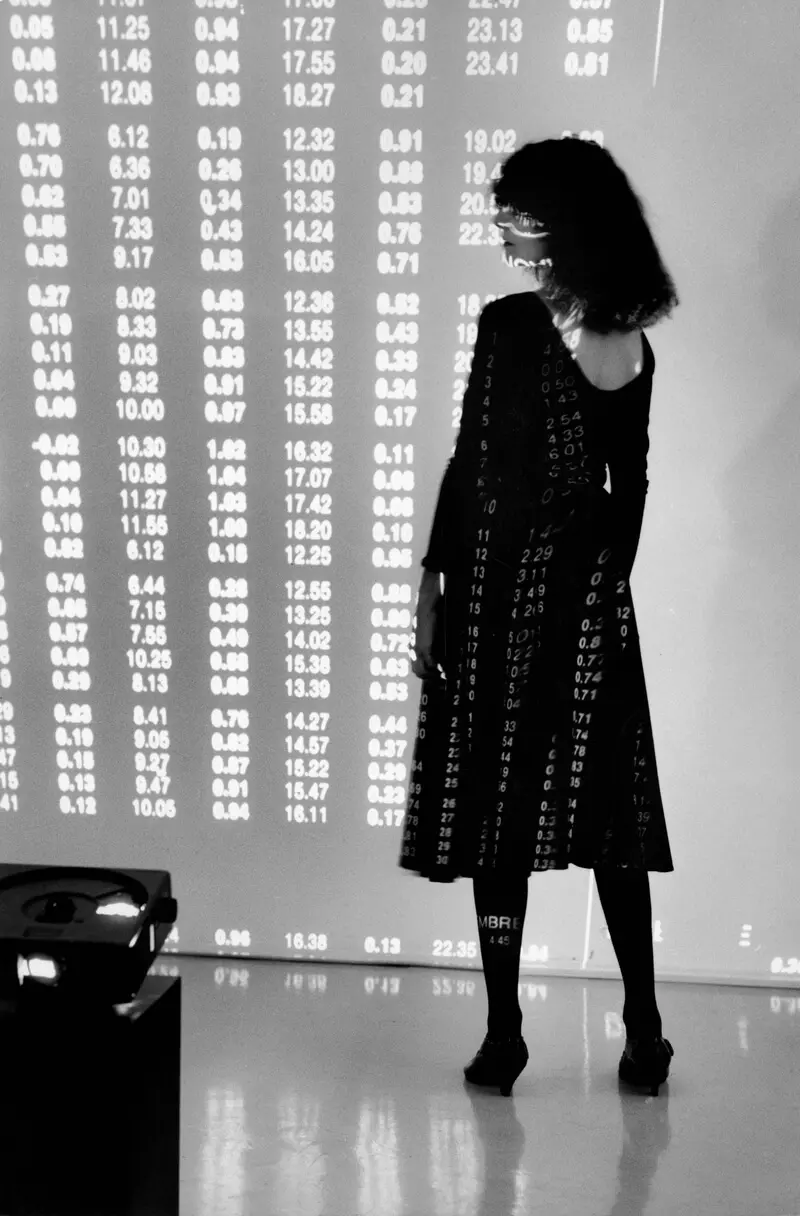
Lucia Romualdi
ph Elisabetta Catalano
For a complete list of exhibitions or additional documentation, please contact the Archive via the Contact section.